The label
Absolute Rubbish started with a pair of scissors, a 9-year-old, and a complete disregard for what things were supposed to be used for.
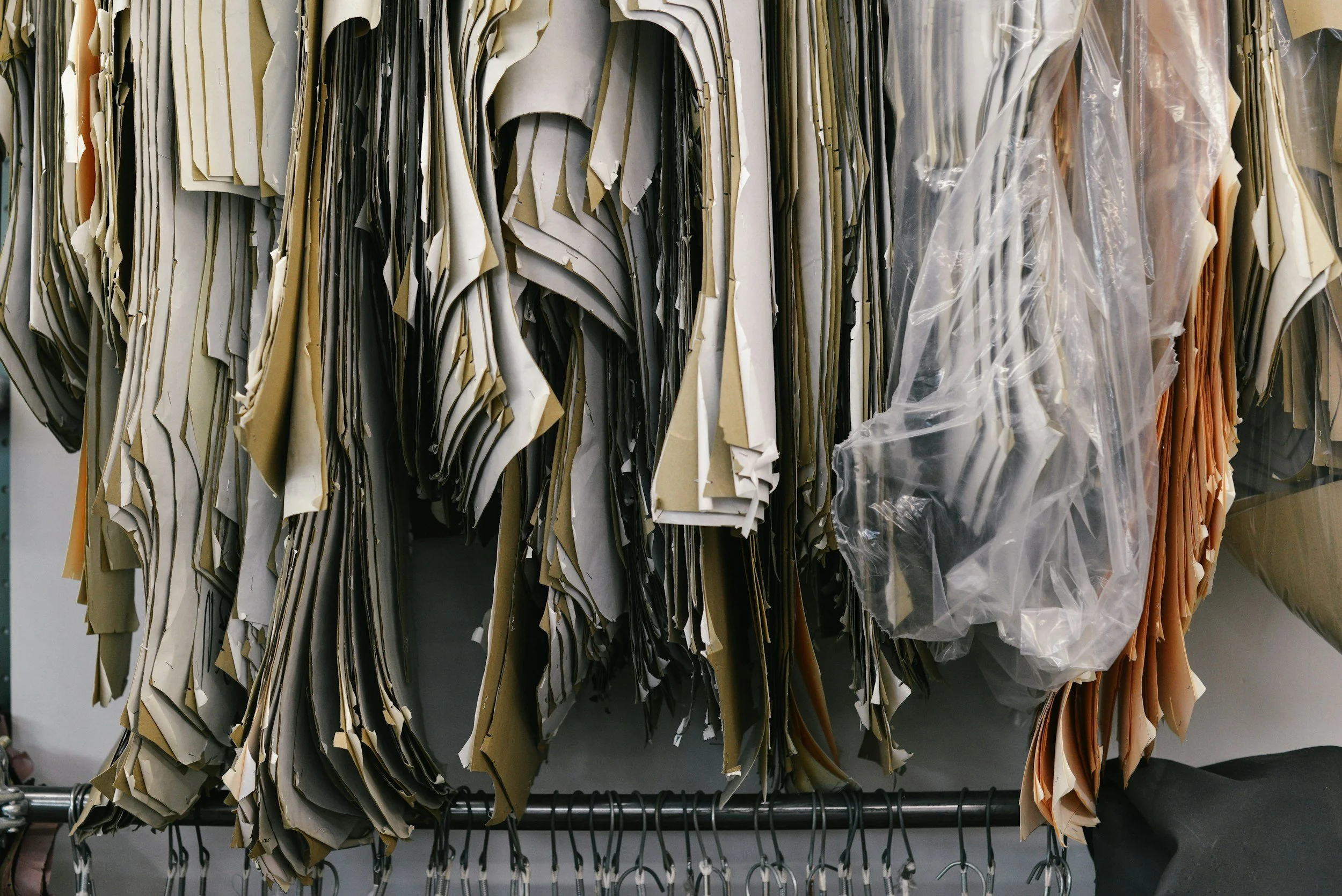
That same instinct…see the material, not the object…is what drives every piece made today. The studio runs on what others have discarded: designer remnants, salvaged upholstery, reclaimed leather, the giveaways from people who know where to bring them. People don't drop off fabric here. They drop off rubbish. What comes out the other side is the point.
Sewing since 9. Fashion classes through high school. First collection at 18 for a Pride fundraiser fashion show in London, Ontario. Design school at George Brown. Over twenty years in business — and specific techniques like leatherwork, rivet-pressing, and upcycling developed and refined entirely through doing.
The philosophy
No such thing as waste. That's not a tagline. It's the operating principle.
The fashion industry is in the top three polluters on earth. New textiles. Petroleum-based synthetics. Dyes that contaminate water systems. A supply chain built on the labour of women and children in developing countries, paid wages that make the $10 price tag make sense in the worst possible way.
Absolute Rubbish is a direct refusal of that system.
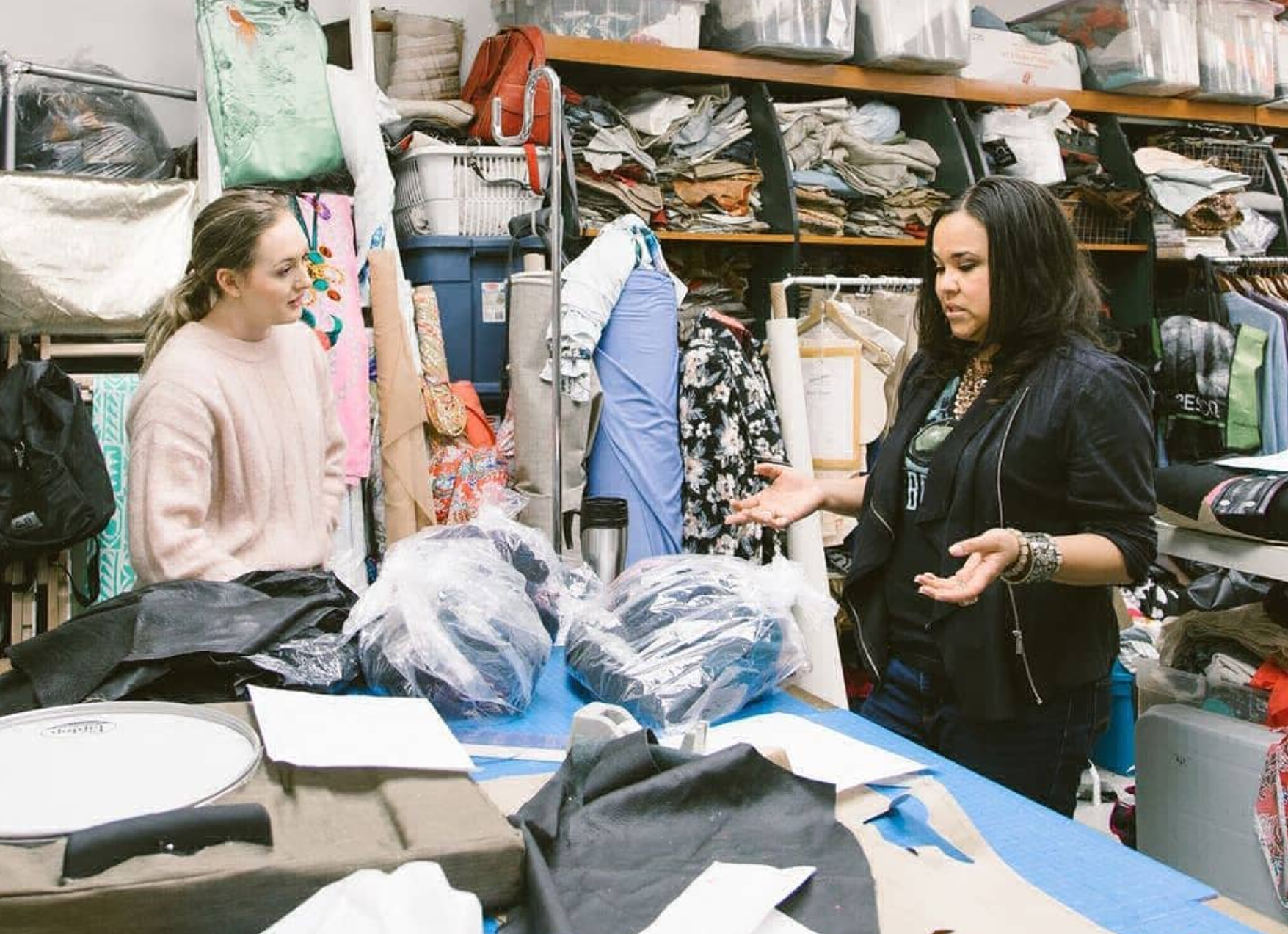
Every piece begins with what already exists. The design follows the material — not the other way around. That constraint is also the creative engine: start with what you have, build within your physical means, and waste nothing. Down to the tiniest scraps. Down to the offcuts that become pillow stuffing.
“Zeppelin makes me want to put studs on leather... Joplin makes me want to turn purple velvet pants into a vest and add embroidery; house music makes me think about sexy/ breathable/ dance worthy pieces. In the studio, whatever I’m listening to makes me remember fabrics I haven’t pulled out in years...”

The craft
The signature details: printed lining — usually upholstery — in coats and bags.
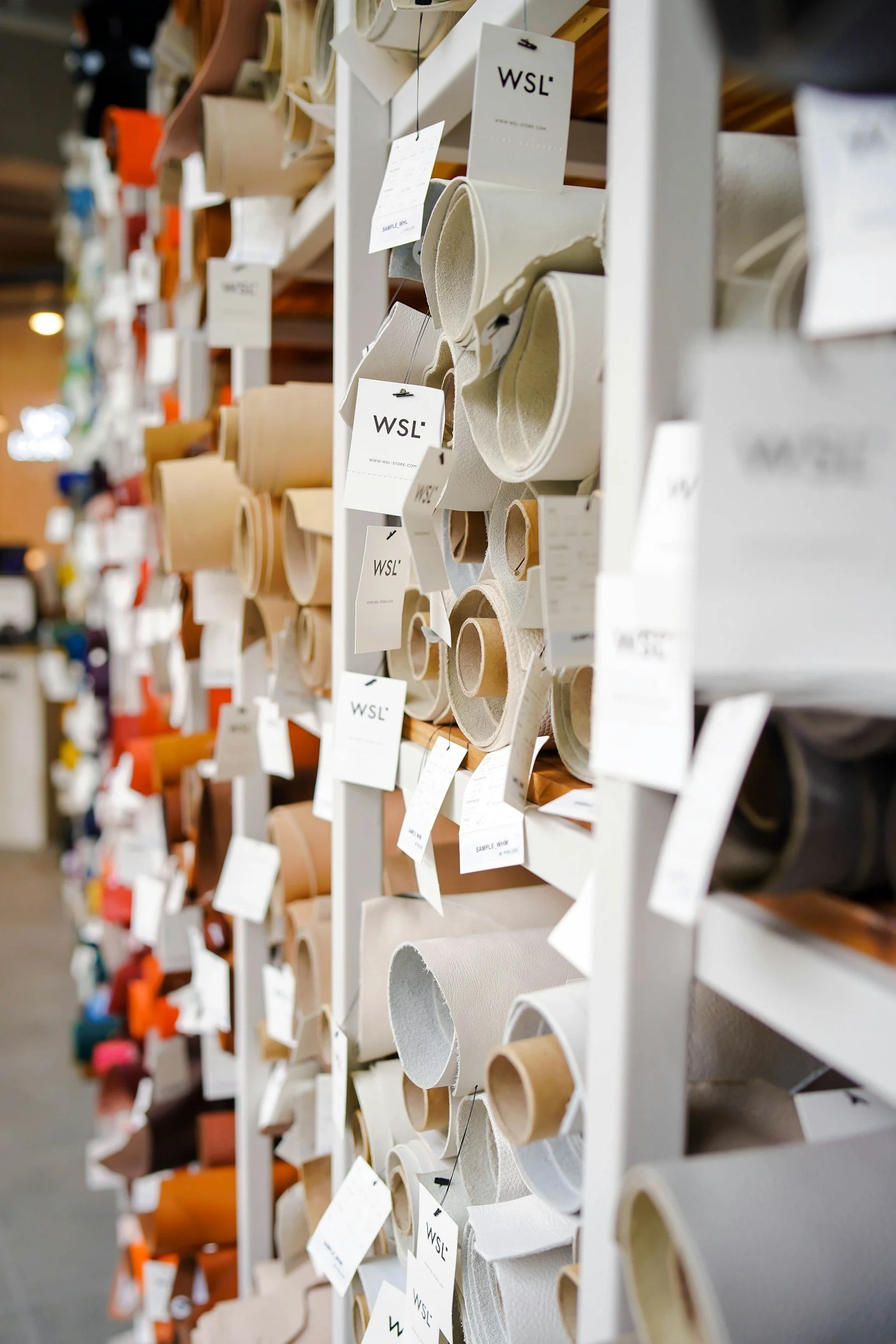
The preference is for weight. Leather is a favourite, mostly non-hide, which required developing entirely original methods of reinforcement and finishing. Upholstery textiles that hold their structure. Denim that has already proven it lasts. These are materials that don't quit.
The process starts with colour and texture, not a sketch.
Pull things from every corner of the studio. Make a pile of chaos. Let the materials tell you what they want to become. It's a method that looks like madness and produces pieces that couldn't have been designed any other way.
Hardware used as design elements: snaps as studs, rivets applied by hand on a press that took time to master.